



1970s Fashion: Trends, Icons, and Cultural Influence
If you’ve scrolled through TikTok lately or browsed the latest drops at Zara, you’ve likely spotted a ghost – the ghost of 1970s fashion. Those flared hems, the chunky platform shoes 1970s style, and the slinky disco dresses are haunting the runways and high streets once again.
This is a full-blown revival. The seventies fashion aesthetic is having a major moment, bridging the gap between vintage charm and modern cool. But to truly rock these looks today, you need to understand where they came from.
From the earthy beginnings of 1970s womens fashion to the glittering excess of Studio 54, let’s unpack the decade that gave us the best (and most daring) 70s fashion ideas – and figure out how to wear it all without looking like you’re headed to a costume party.
1970s Fashion: Overview of the Decade
To understand 1970s fashion, you have to look at the world that created it. The optimism of the 60s was fading, replaced by a more cynical, yet expressive, attitude. The Vietnam War was ending, the workforce was changing, and personal expression became paramount.
How 1970s Fashion Reflected Social Change
As the women’s liberation movement gained traction, 1970s womens fashion began to offer more variety. It was about choice. You could choose the soft, romantic 70s bohemian style, or you could choose the sharp, tailored lines of a pantsuit, signaling independence and power. 1970s fashion for men broke free from the starched conformity of the previous decades. Color, texture, and length – whether in hair or lapels – became a way to signal individuality.
Key Cultural Movements That Shaped Style
Three major pillars held up the roof of the 1970s clothing style. First, the environmental movement pushed for earth tones and natural fabrics. Second, the Glam Rock scene, led by icons like David Bowie, shattered gender norms and introduced glitter and androgyny to the mainstream. Finally, the Disco movement turned nightlife into a fashion runway, making disco 70s fashion synonymous with excess, glamour, and freedom.
From Hippie to Disco: The Evolution of the 70s Look
It’s fascinating to see how the look evolved. In the early years, 1970 fashion was an extension of the late 60s. It was rustic, handmade, and anti-establishment. But as the decade progressed, the polyester blend became the fabric of choice. The mood shifted from “make love, not war” to “stayin’ alive.” By the time the late 70s rolled around, seventies fashion had gone from the farm to the disco floor.
Early 1970s Fashion Trends
If you are looking for comfort and a connection to nature, the early 1970s fashion trends are where you’ll find your groove.
Bohemian and Hippie Influence
The hippie movement didn’t just vanish when the calendar flipped to 1970; it evolved into a more polished 70s bohemian style. Think flowing maxi dresses, crocheted vests, and fringe – lots of fringe. It was a style that rejected the synthetic stiffness of the modern world, favoring a look that was romantic and free-spirited. This is the spirit of 70s fashion women loved for its ethereal vibe.
Flared Jeans and Bell-Bottom Pants
If there is one silhouette that defines the 1970’s fashion decade, it’s the flare. Bell-bottom jeans were the great equalizer. Worn by rock stars, housewives, and kids alike, these pants widened from the knee down, creating a dramatic silhouette that balanced out the broader shoulders and bold tops of the era. They are the cornerstone of any authentic 70s style.
Earth Tones and Natural Fabrics
In the early part of the decade, the palette was dictated by the earth. Mustard yellow, avocado green, burnt orange, and chocolate brown dominated closets. Fabrics like cotton, suede, and corduroy were king. This grounding in nature provided a stark contrast to the neon chaos that was about to descend.
Mid-1970s Fashion and Glam Rock
Just as we were getting cozy in our corduroy, the mid-70s turned up the volume. Glam Rock stomped onto the scene, and with it came a new, more theatrical definition of 1970s fashion.
Platform Shoes and Statement Footwear
You can’t conquer the world if you can’t reach the mic stand. Platform shoes 1970s style were the ultimate power boost for both men and women. These weren’t just heels; they were wooden-soled, cork-wedged, ankle-strap monuments to excess. Whether you were headbanging at a concert or just walking down the street, platforms forced you to stand tall and strut.
Bold Prints and Shiny Fabrics
Subtlety took a vacation. This era of 70s fashion was all about loud, abstract prints, paisley patterns, and geometric shapes. But the real game-changer was fabric. Polyester became the star – it was cheap, didn’t wrinkle, and, most importantly, it shone. Satin and lurex threads turned everyday clothing into a shimmering spectacle.
Influence of Music and Pop Culture
Music didn’t just influence fashion; it dictated it. The androgynous look of David Bowie’s Ziggy Stardust era sent men racing to buy glitter and eyeshadow. Bands like The Rolling Stones defined the rocker look – skin-tight trousers and open shirts. This cross-pollination ensured that 1970s fashion icons were largely made on the stage.
Late 1970s Fashion and the Rise of Disco
As the decade waned, the lights dimmed on the rock stage and brightened on the dance floor. The late 70s belonged to the nightclub, and disco fashion was the dress code.
Disco Dresses and Jumpsuits
For 1970 fashion women, the uniform of the night was the disco dress. These were slinky, bias-cut slips that moved with the body, often in jersey or silk. But the true icon of the era was the jumpsuit. A one-piece wonder, the jumpsuit – often in wild prints or shimmering fabric – was the ultimate power move. It was sleek, it was easy to dance in, and it covered you in pure glamour. This is perhaps the most enduring image of 1970s womens fashion.


Metallic Fabrics and Sequins
Under the glitterball, you had to shine. And shine they did. Disco fashion demanded metallic fabrics – lamé, liquid silver, and gold. Sequins weren’t just for showgirls anymore; they were for anyone wanting to catch the light. Authentic 70s disco fashion was about catching a reflection and throwing it back at the crowd. It was a visual representation of the music’s energy.


Studio 54 and Nightlife Style
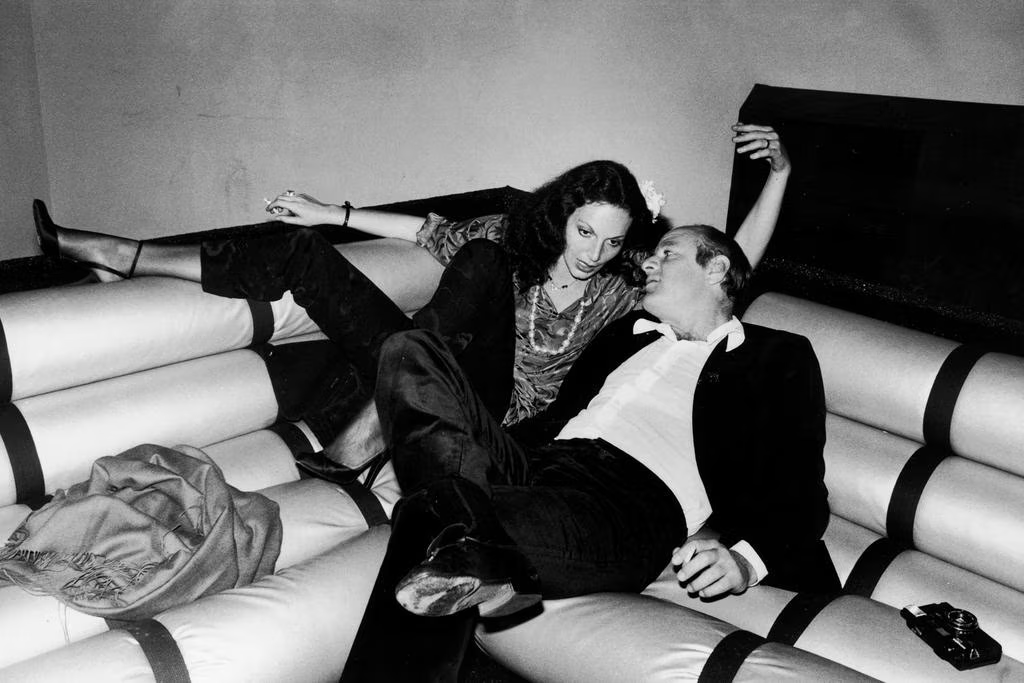
No discussion of late 1970s fashion is complete without mentioning Studio 54. The legendary New York club was a melting pot of style. It’s where Bianca Jagger rode in on a white horse, where Halston held court, and where 70s fashion ideas were born on the dance floor. The style was exclusive yet eclectic – you were just as likely to see a socialite in a designer gown as a busboy in a leather vest. It was the pinnacle of nightlife style.


1970s Fashion for Women
Let’s break down the specific elements that made womens 1970s fashion so revolutionary.
Maxi Dresses and Wrap Dresses
The maxi dress offered a modest yet sensual alternative to the mini skirt. Flowing to the floor, often with long sleeves and a high neck, it was a staple of 70s bohemian style. On the other end of the spectrum, Diane von Fürstenberg introduced the wrap dress in 1974. It was a game-changer for 1970s fashion women: sexy, professional, and incredibly flattering.
High-Waisted Pants and Halter Tops
The high-waisted pant, often in a wide-leg or flare, elongated the leg and cinched the waist. Paired with a halter top, which left the shoulders and back bare, it was the go-to look for a night out. This combination is a key element of 70s fashion trends that remains incredibly popular today.
Popular Hairstyles and Accessories
You couldn’t just wear the 1970s fashion for women clothes; you had to have the volume. The “Farrah Fawcett” flip was the holy grail of hair. Accessories were oversized: think big hoop earrings, layered pendant necklaces, and silk scarves tied around the neck or head. Sunglasses got bigger too, evolving into the iconic aviators and oversized frames that screamed Hollywood.
1970s Fashion for Men
Gentlemen, the 1970 fashion trends were your time to experiment. The suit was deconstructed, the shirt was unbuttoned, and the hair was feathered.
Wide-Lapel Suits and Three-Piece Styles
The 1970s fashion for men started with the suit. Lapels widened to an almost absurd degree, and trousers flared over shoes. The three-piece suit – jacket, waistcoat, and trousers – became a staple of the sophisticated man, often in bold checks or pastel colors. It was a look that said, “I mean business, but I also know how to party.”
Denim and Casual Wear
Denim became a uniform in its own right. The denim jacket, often adorned with patches or embroidery, was a casual staple. Paired with bell-bottom jeans and a soft, printed shirt (unbuttoned to the chest, of course), it defined the casual, rugged 70s style for men.
Facial Hair and Grooming Trends
The clean-shaven look of the 60s gave way to serious facial hair. Mustaches – think Magnum P.I. – were huge. Sideburns grew long and thick, often meeting the hairline. Hair itself was long, feathered, and perfectly coiffed, requiring as much product and attention as any woman’s style of the era.
1970s Fashion Icons
The 70’s fashion trends mean nothing without the people who wore them. These 1970s fashion icons defined the era and still inspire us today.
Cher and Bianca Jagger
Cher was the master of the dramatic. Her Bob Mackie-designed ensembles – sheer, beaded, and barely there – pushed boundaries and defined red carpet glamour. Bianca Jagger, on the other hand, was the queen of cool. Her tailored, androgynous white Halston suits and minimalist elegance provided the perfect counterpoint to the decade’s excess.
David Bowie and Glam Influence
David Bowie didn’t just follow 70’s fashion; he created a parallel universe for it. As Ziggy Stardust, he brought glam rock fashion to the masses with bold makeup, colorful hair, and avant-garde jumpsuits. He inspired a generation to use fashion as a form of identity and art.
Farrah Fawcett and Mainstream Appeal
If Bowie was the avant-garde, Farrah Fawcett was the mainstream. Her look – the feathered hair, the radiant smile, the perfect tan in a simple red swimsuit – was the aspirational 1970s fashion women wanted to achieve. She represented the sunny, healthy, California-cool vibe that dominated magazine covers and bedroom posters.
1970s Fashion Designers and Brands
The talent behind the seams was just as important as the stars who wore them. Here are the key players who defined 1970s fashion.
| Designer/Brand | Signature Style | Impact on 1970s Fashion |
| Halston | Ultra-suede, minimalism, fluid jersey silhouettes, shirtwaist dresses. | He defined American minimalism, creating looks that were simple, luxurious, and perfect for the Studio 54 set. He dressed the “Halstonettes” and made personal style a brand. |
| Yves Saint Laurent | Le Smoking tuxedo suit, power dressing, art-inspired prints (Mondrian), safari jackets. | He empowered women by borrowing from the male wardrobe, tailoring it perfectly for the female form. He is arguably the most influential designer bridging 1960s fashion and the 70s. |
| Diane von Fürstenberg | The iconic Wrap Dress. | She created a dress that became a symbol of independence and practicality for the modern woman. It sold in the millions and became a uniform for the working woman exploring 1970s womens fashion. |
| Vivienne Westwood | Punk aesthetics, deconstructed fashion, provocative t-shirts, bondage wear. | Alongside Malcolm McLaren, she brought street-level rebellion and punk rock attitude into the mainstream fashion conversation, directly influencing the anti-establishment look of the late 70s. |
| Ossie Clark | Flowing, romantic dresses, signature snake print, wasp-waist tailoring, Celia Birtwell prints. | He was the darling of the London scene. His designs defined the 70s bohemian style for the fashionable elite, dressing everyone from The Beatles to Bianca Jagger with a sensual, rock-and-roll edge. |
| Emilio Pucci | Psychedelic prints, bold geometric patterns, bright color palettes, stretch fabrics. | While rising in the 60s, his vibrant, body-conscious disco fashion dresses became the uniform for glamorous women on the ski slopes and the dance floor, defining the jet-set 1970s fashion trends. |
| Levi’s | Denim jeans (especially the 501), denim jackets, corduroy. | They democratized 1970s fashion for men and women. Levi’s made denim a staple of everyday life, moving it from workwear to a symbol of casual, rugged 70s style. The denim-on-denim “Canadian Tuxedo” look peaked here. |
| Biba | Art Deco influences, dark, moody colors (plum, navy, black), feathered boas, wide-legged trousers. | The ultimate destination for 70s fashion women in the UK. Biba wasn’t just a brand; it was a lifestyle destination (a multi-story store in London) that made high-fashion looks accessible to the masses. |
| Kenzo (Jungle Jap) | Layering, oversized silhouettes, bold floral prints, and mixing folkloric textiles. | Kenzo Takada brought a fresh, Eastern perspective to Paris. His use of volume, knitwear, and mixed patterns introduced a new, playful silhouette that contrasted sharply with the body-conscious disco 70s fashion of the time. |
1970s Fashion Influence on Modern Style
The 70s womens fashion trends never really went away. They just hid in the back of our closets waiting for the right moment to re-emerge.
Revival of Bell-Bottoms and Flares
Just look at any high street store today. You will see the unmistakable shape of bell-bottom jeans. They’ve been rebranded as “flares” or “bootcuts,” but the silhouette is pure 1970s fashion. They offer a flattering alternative to the skinny jean and have become a staple of modern boho wardrobes.
Boho-Chic in Contemporary Fashion
The 70s bohemian style lives on through the “Boho-Chic” movement. Designers regularly tap into this vein, sending models down the runway in flowing maxi dresses, crochet, and suede fringe. It’s a look that feels both nostalgic and perfectly current, offering easy 70s fashion ideas for everyday wear.
70s Aesthetics in Runway Collections
Season after season, major fashion houses pay homage to the decade. From Saint Laurent’s permanent nod to the 70s with their wide-lapel jackets and velvet, to Gucci’s revival of the glam-rock aesthetic, the influence is undeniable. The decade’s love of print, texture, and fluidity provides endless inspiration.
Latest Posts
- 8 Alo Yoga Products Loved by Celebrities (And Where to Get Them)
- The Alo Yoga Outfit Trends Dominating Instagram and TikTok
How to Recreate 1970s Fashion Today
You don’t need a time machine to rock this look. Here is how to master 1970s fashion in the modern world.
Key Pieces to Add to Your Wardrobe
Start with the basics:
- A pair of flares or wide-leg trousers. (Bell-bottom jeans are a must).
- A kimono or faux-fur vest. (Perfect for adding texture).
- A silk shirt. (Preferably in a bold print or jewel tone).
- Platform shoes or boots. (Even a slight platform adds authenticity).
- A slip dress or a wrap dress. (Effortless and iconic).
Mixing Vintage with Modern Trends
The secret to great style is balance. If you are wearing a loud, printed 70s disco fashion top, pair it with clean, modern jeans and simple sneakers. If you are wearing flared jeans, balance the volume with a fitted, modern t-shirt. This prevents you from looking like you are heading to a costume party and keeps the look fresh.
Styling Tips for a Subtle 70s Look
If head-to-toe seventies fashion feels too intimidating, start small.
- Accessorize: Add a pair of round sunglasses or a silk scarf to your current outfit.
- Color Palette: Swap your neutrals for earth tones – swap the black for a chocolate brown, the white for a cream.
- The Collar: Look for tops with a subtle pointed collar. It’s a small detail that instantly channels the decade without overwhelming your look.
Remember, the best 70s fashion ideas are the ones that feel like you, just with a little extra groove.
1970s Fashion FAQs
The most popular trends included bell-bottom jeans, platform shoes, maxi dresses, wrap dresses, and wide-lapel suits. The decade saw a shift from 70s bohemian style to 70s disco fashion, embracing everything from earthy cottons to shiny metallics.
Bell-bottom jeans became popular because they were a symbol of the counterculture movement, adopted by hippies and later by rock stars. They offered a dramatic, flattering silhouette that balanced broader shoulders and became a staple of 1970s clothing style for both men and women.
1970s fashion is already here. From the resurgence of flared jeans on the high street to the boho-chic trends seen on runways, the influence of the decade is pervasive. Modern designers and fast-fashion retailers constantly recycle 1970s fashion trends, proving that great style is truly timeless.


